
Astronomy
Meteor Showers: How They Form and When to See Them
Learn how meteor showers form, why Earth passes through comet debris, when annual meteor showers occur and how to find the best conditions for observing shooting stars.
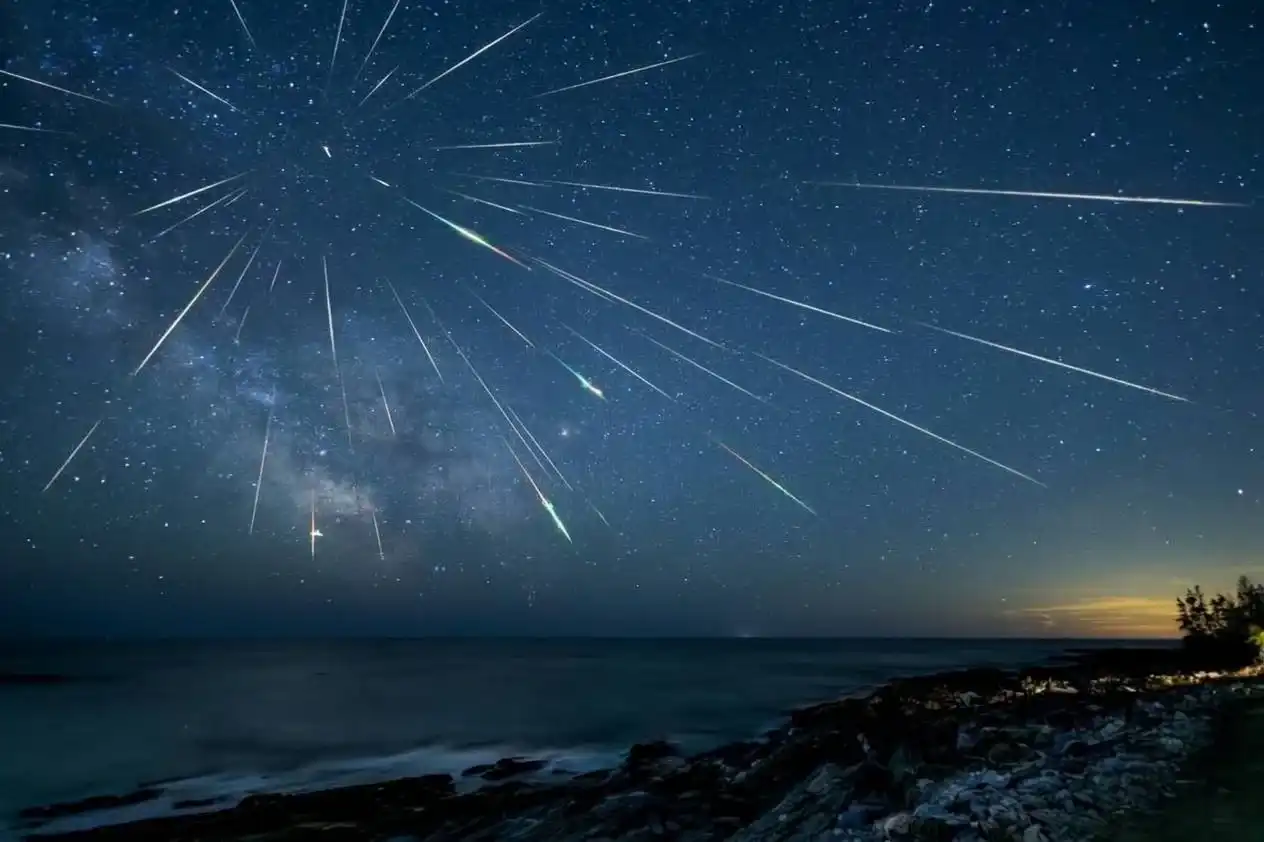
Meteor showers are among the most accessible astronomical events to observe because they do not require a telescope or other specialist equipment. At certain times of the year, Earth travels through streams of dust and small particles left behind by comets and, in some cases, asteroids. When these particles enter Earth's atmosphere at high speed, they heat the surrounding air and produce bright streaks of light known as meteors. Under suitable observing conditions, several meteors may appear across the night sky within a short period.
What Causes a Meteor Shower?
Many comets release dust and small particles as they travel around the Sun. Solar heating causes material to escape from their surfaces, leaving debris along parts of their orbital paths. Over time, this material spreads into streams that can extend around the Sun. When Earth's orbit intersects one of these streams, particles enter the atmosphere at high speeds and produce visible meteors. Most of the particles are extremely small and disappear high above Earth's surface. The regular intersection of Earth with these debris streams explains why many meteor showers return around similar dates every year.
What Is the Difference Between a Meteoroid, Meteor and Meteorite?
These three terms describe different stages of material travelling through space and Earth's atmosphere. A meteoroid is a small rocky or metallic object moving through space. When it enters Earth's atmosphere and produces a visible streak of light, the phenomenon is called a meteor. If part of the object survives its passage through the atmosphere and reaches the ground, the remaining material is known as a meteorite. Understanding these differences helps explain why the bright streaks seen during meteor showers are generally atmospheric events rather than objects landing on Earth.
Popular Annual Meteor Showers
Several well-known meteor showers occur throughout the year. The Quadrantids are active around January, the Lyrids generally occur in April, and the Perseids are active during July and August. The Orionids usually appear in October, while the Geminids are among the major showers of December. Each shower has its own activity period, expected peak and radiant location. The number of visible meteors can vary significantly between years because of moonlight, atmospheric conditions and the position of Earth's passage through the debris stream. A current meteor shower calendar is useful for identifying the expected peak dates and observing conditions.
What Is a Meteor Shower Radiant?
A meteor shower is named after the constellation or nearby star region from which its meteors appear to originate. This apparent starting point is called the radiant. For example, Perseid meteors appear to radiate from the direction of the constellation Perseus. The meteors are actually travelling along nearly parallel paths through space, but perspective makes their trails appear to converge toward one region of the sky. Observers do not need to look directly at the radiant to see meteors. Looking across a wider area of the sky often provides a better chance of spotting longer and more noticeable trails.
Where and When Should You Watch a Meteor Shower?
A dark location away from city lights usually provides the best viewing conditions. Light pollution reduces the contrast between faint meteors and the surrounding sky, making them harder to see. Allow your eyes time to adapt to darkness, avoid bright phone screens and choose a location with a wide, unobstructed view. Many meteor showers are easier to observe after midnight and before dawn, although the best viewing period depends on the shower's radiant and the observer's location. Comfortable seating, suitable clothing and patience can make a long observing session more enjoyable.
Does the Moon Affect Meteor Shower Visibility?
Moonlight can make faint meteors harder to see by increasing the brightness of the night sky. A meteor shower occurring near a new moon may therefore offer better conditions than one taking place during a bright full moon. However, the Moon's position and the time it rises or sets also matter. If the Moon is below the horizon during the main observing period, its light will have less effect on visibility. Weather, cloud cover, atmospheric transparency and artificial lighting also influence the number of meteors an observer can see.
What Is the Zenithal Hourly Rate?
Astronomers use the Zenithal Hourly Rate, commonly called ZHR, to describe the theoretical number of meteors an ideal observer could see in one hour under specified conditions. These conditions include a dark sky, a radiant positioned directly overhead and an unobstructed view of the sky. The actual number seen by an individual observer is usually lower because real observing conditions are rarely perfect. Therefore, a published ZHR should not be interpreted as a guaranteed number of meteors visible from every location. Light pollution, moonlight, weather and the radiant's altitude all affect the real viewing rate.
Do You Need a Telescope to Watch Meteor Showers?
No telescope or binoculars are needed to enjoy a meteor shower. In fact, the unaided eye is generally better because it provides a much wider field of view. A telescope focuses on a small area of the sky and can make it easier to miss fast-moving meteors outside that region. A reclining chair, warm clothing and a comfortable observing location are often more useful than expensive equipment. Photography is possible with a camera capable of long exposures, but capturing meteors requires suitable settings, a stable tripod and patience.
Why Meteor Showers Matter to Science
Meteor showers provide scientists with opportunities to study material released by comets and asteroids. Observations can reveal information about the distribution, speed and behaviour of particles entering Earth's atmosphere. Researchers can also study the interaction between these particles and atmospheric gases, including the production of light and ionisation. Understanding meteor streams contributes to wider research into the history of the Solar System and the physical characteristics of small Solar System bodies. Although meteor showers are often enjoyed as visual events, they also provide valuable opportunities for scientific observation.