
Space Economy
How Much Does It Cost to Launch a Rocket Into Space?
Discover how much rocket launches cost, what determines launch prices, how reusable rockets affect expenses and how the commercial space industry operates.
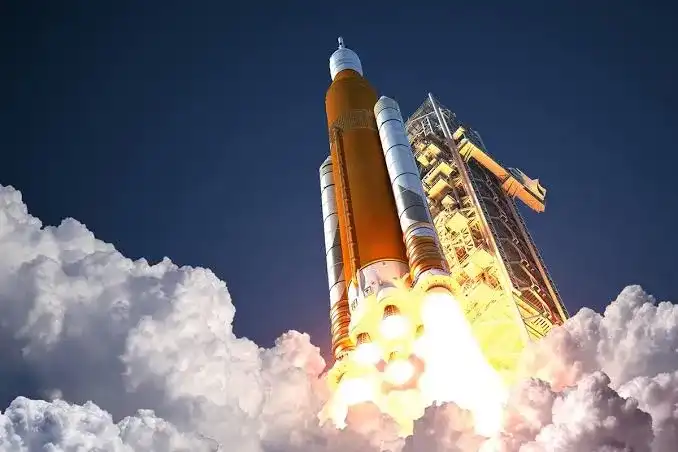
Launching a rocket into space is an expensive engineering operation involving specialised hardware, propulsion systems, launch facilities, testing and highly trained personnel. However, the price of reaching orbit varies considerably depending on the rocket, payload and mission requirements. Commercial launch companies have introduced new business models and reusable technologies that are changing the space transportation industry. Understanding launch costs helps explain why some space missions are more expensive than others and how businesses, governments and research organisations purchase access to space.
How Much Does a Rocket Launch Cost?
There is no single price for launching a rocket. A small dedicated launch vehicle, a medium-class orbital rocket and a heavy-lift system have different manufacturing, operating and infrastructure requirements. Even two missions using the same rocket can have different prices because they may require different orbits, payload arrangements, launch schedules or additional services. Some customers purchase an entire dedicated launch, while others share a rocket with multiple satellite operators. Published launch prices should therefore be understood as specific service prices rather than universal costs for every mission.
What Determines the Cost of a Rocket Launch?
Several factors influence the price of a launch service. Payload mass is important because heavier spacecraft generally require more energy and greater lifting capability. Destination orbit also matters: reaching a low Earth orbit is different from delivering a spacecraft into geostationary orbit or sending a probe toward another planet. Other considerations include payload dimensions, environmental testing, integration requirements, launch-site operations, mission assurance and schedule flexibility. Launch providers must also account for vehicle manufacturing, engineering, maintenance, workforce and the infrastructure needed to prepare each mission.
Dedicated Launches Versus Shared Rides
A dedicated launch allows a customer to purchase the launch vehicle's capacity for a particular mission. This can provide greater control over the launch schedule, payload deployment and target orbit. A rideshare mission combines payloads from several customers on one rocket, allowing the launch provider to distribute transportation costs among multiple satellite operators. This arrangement can make orbital access more affordable for smaller spacecraft, universities and research organisations. However, rideshare customers may have less flexibility over deployment timing and orbital requirements because the mission must accommodate several payloads.
Why Different Rockets Have Different Prices
Launch vehicles are designed around different payload capacities, destinations and operational requirements. Small launchers can provide dedicated access for relatively lightweight satellites, while larger rockets can carry heavier spacecraft or multiple payloads. A rocket's price is influenced by its design complexity, engine technology, manufacturing process and expected launch frequency. Mission requirements also matter: delivering a satellite into a particular orbit may require additional performance compared with placing the same payload into a lower-energy destination. Choosing a launch vehicle therefore involves balancing cost, reliability, capacity and mission needs.
How Reusable Rockets Can Reduce Costs
Reusable rockets are designed to recover and reuse major vehicle components instead of manufacturing an entirely new rocket for every flight. Recovering a first-stage booster can reduce the amount of hardware that must be replaced between launches. This approach can also help providers increase launch frequency if recovery and refurbishment operations become efficient. Nevertheless, reusability still involves inspection, maintenance, testing, recovery equipment and replacement of components that experience wear. The actual financial benefit depends on how many times a component can fly, how much refurbishment it requires and how reliably the launch system operates.
Launch Price Versus the Total Cost of a Space Mission
The price paid to a launch provider is only one part of a space mission's total budget. A satellite or spacecraft must also be designed, manufactured, tested and prepared for its operating environment. Organisations may need to pay for ground stations, communications, mission control, insurance, regulatory approvals and years of engineering work. Scientific missions can require specialised instruments and extensive testing, while commercial satellites need additional investment in their operational services. This means a relatively affordable rocket launch does not necessarily result in an inexpensive space mission.
The Business Behind Commercial Space Launches
Commercial launch providers serve a wide range of customers, including satellite operators, telecommunications companies, government agencies, scientific organisations and universities. Satellite networks create demand for regular launches, while Earth observation, navigation and communications services depend on spacecraft reaching suitable orbits. Launch companies compete through reliability, payload capacity, scheduling, mission flexibility and pricing. Some providers also develop reusable systems or offer integrated services that help customers prepare and deploy their spacecraft. The commercial launch market therefore combines advanced engineering with complex business and operational decisions.
Why Launch Costs Matter for the Future of Space
The cost and availability of launch services influence which space projects are financially practical. More accessible transportation can create opportunities for smaller satellite operators, universities and research institutions that previously faced significant barriers to reaching orbit. It may also support the development of larger satellite networks, commercial space stations and future lunar infrastructure. However, reducing launch prices alone cannot solve every challenge in the space economy. Spacecraft manufacturing, orbital operations, communications, maintenance and regulatory requirements remain important parts of the overall investment.
How to Compare Rocket Launch Costs
When comparing launch services, customers should look beyond the advertised price. Important considerations include the target orbit, payload mass, available payload volume, launch schedule, mission reliability and any additional integration or deployment services. Price per kilogram can be a useful comparison metric, but it does not always reflect the actual value of a launch. A cheaper shared ride may not meet the timing or orbital requirements of a particular spacecraft. The best launch option is the one that meets the mission's technical and operational requirements at an acceptable overall cost.